EXPOSITION AND MICRO-NURRRATIVE
By
By
Steve Bullin
As mentioned in Games Need Better Storytelling part 2, exposition is the integral part of storytelling that delivers the context needed for meaningful world interactions to the player and.. well dang-it here; Extra Credits did a bit on Exposition already. And I guess this should be here too. Anywho, without exposition done well the player will either tune out of the games story and not know what's happening or are less likely to care about what does happen. I bet there are people out there now saying "We'll I don't really care about story, I just like multiplayer and shooting things.", I'm tempted to tell you to leave right now.. But I know that's just because you've become accustom to terrible stories in games. Everyone has those moments they've just started playing a game and they just can't get themselves to care enough to keep playing. They toss the controller aside and turn of their console(or computer) and say "This is so stupid. Why does the game even have me doing this?". And HAHA, you've just proven my point. Narrative is the justification of actions, without it, we don't feel or understand the drive for anything to happen onscreen. It's like reading a very, very terrible fan fiction or .. story written by an inexperienced author. Things like explosions, and gun scenes, and the hero making out with the girl are there just because. And because the creator simply wanted it -without any internal logic or reasoning behind the events happening- the reader really can't get themselves to enjoy, much less understand, the piece.

 Of course there are games like chess or checkers that some might argue have no narrative, to that I say hogwash. Narrative does not always have to embody the form we regularly associate with "story", it simply has to establish a purpose. You draw O's to make a line or cut off the other player's line of X's and win. You move the pieces on checkers to hop over and eliminate all the opponent's pieces. You move the specific chess pieces in certain ways because they each have different titles and properties, you do this to corner the opponent's king. The frog crosses the road and river to get to the other side. You shoot down the missiles because they're nukes and will blow up whole towns and you'll lose. Now the exposition in these simple cases like chess or checkers would simply be the rules. To win you have to corner the king, to corner the king you have to set up a number of your pieces that will entrap him without being at risk of being removed in the following turn themselves. To do that you have to understand the movement of each piece. And there on would be a description of the movements and rules each separate piece abides by throughout the game.
The same is true (and better explained) with the narrative of Frogger, getting across the road requires you don't die. Dieing is the narrative behind an event that causes and end game, where crossing the road or river is the narrative behind the player moving up the screen. Surviving and getting across without causing an end game is the narrative behind winning the level. Ergo the exposition behind all of these things is the game's explanation of how the narrative fits behind the mechanic and progression of play. When the player causes this end game it was because they were hit by a car, they drowned, ect. The exposition is accomplished in these early forms by graphics and sound effects, and nothing has changed. The narrative behind why something could be in these life/death situation is a frog on the highway near a river. The narrative behind the mechanic of movement is jumping, the exposition of this is the sound effect and the animation of the pixel frog jumping. Likewise the exposition of the frog entering an end game is the death animation and sound following an event that would cause an end state. The exposition delivers the context needed for meaningful world interactions to the player. Avoiding or chasing the pixels on screen mean something and provide the drive for the game, the exposition explains the narrative and creates the framework for the experience.
(this guy does a bunch of great game recordings check his channel out here)
I'm certain all of us have had moments where, without that framework, we were unable to appreciate an experience. When we were real young and we couldn't figure out the controls we still loved the movement onscreen, but got upset with the game when it didn't do what we wanted. And remember that moment you first picked up a game and really got the controls? It was as if a whole world was opened up to us onscreen. Because of the impute-response and the exposition-narrative on top of it we acquired an understanding to that impute-response happening onscreen and were really able to immerse ourselves into the world. We could feel this sort of kinetic projection between ourselves and the avatar onscreen. We think jump or shoot in our heads and it translates to actions onscreen, our avatar gets hit off a cliff or we misjudge a jump and cringe when we see them fall to their death. We could project ourselves as the character onscreen. This kind of self projection onto the game avatar makes every in-game interaction more intimate and engaging for the player. Here is where dialog comes in.

How fun is it watching people lean when making a turn?
In truth dialog is simply and extension of the exact same exposition to narrative as mentioned before, it is simply a different form. Similar to how death sound is similar exposition to death animation, it simply engages the player differently in providing that context. End game death text -along with opening menu and file loading- might be one of the most perfected handling of dialog exposition in game simply because it provides pacing and doesn't interrupt the standard gameflow within the piece. It forces that moment of pause and makes the player wallow in their moment of failure, while also giving them time to calm down, or deescalate from the tension of the situation they were in at the moment of the end game. It's like catching your breath before running into battle, it allows a moment of mental preparation and allows the player to feel their triumphs are more meaningful because they were allowed a moment to pause and reassess the challenge before them. Giving that time for players to analyze the game's challenge and strategist attaches that much more meaning to gameplay and different mechanics as they are introduced over time.

You know when-
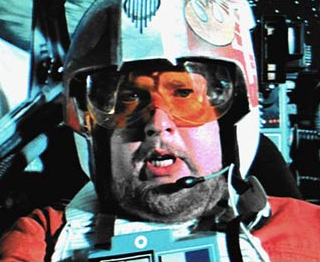
-Alright, alright. Dialog exposition.
The movement in gaming for the past... probably longer then I've been around. Has been to better convey story, character, plot, narrative, within games and to make those characters and story more real and meaningful to the player. I'll take a shot in the dark and say that's actually been the underlying movement throughout entire history of games. But to speak specifically about video games, the movement has been to expand the narrative and world of games through interaction and plot LIKE NO PLAYER HAS EVER SEEN! We see this through the obsession of dynamic choice, more realistic graphic, more realistic physics, character design, character and world interaction, ect. But the simple fact of the matter is that all these things boil down to a flashy exposition of a, normally less then flashy or interesting, narrative. This is where exposition and narrative in games fail, they provide context for a shallow, dull, or downright overplayed narrative. If that narrative is not something players can really relate or get attached to then the motivation built behind everything in the piece is lost to them. All the novels worth of text, dialog interactions, or whatever interactions onscreen that give us context cannot make us interested in a flat world. Now there are a dozen things that can debunk a narrative and ruin a game, but a good example might be those really poorly made web based games. I'm more talking about the, shoot the watermelon or stomp the cockroach, kind of games then FarmVille. The narrative in those games is weak; not just because they're punch, shoot, crush the thing games. But because that's the entire narrative, do this action, "Win a Prize!"; but we know that's a scam so the only narrative is the action itself. The exposition of some watermelon exploding or some cardboard cutout figure getting hit is the reasoning behind the interaction, flashy exposition with an uninteresting narrative.
Narrative and exposition are two sides of the same coin, the story and the means of storytelling. As we've seen one does not exist without the other even in games without dialog or much in the way of narrative. The best way to learn balance in my opinion is to study experiences that use the least number of forms of exposition as possible to better acknowledge and understand both the underlying narrative and the exact lengths the forms of exposition go to convey the moments of narrative in a game. In other words we should be look at games that have no dialog (or very little) to better understand the importance of it and the importance of just leaving it out when it's unnecessary. By understanding the depth and level of story and characters that can be conveyed through exposition that's easy to include without the slightest break in the gameflow we can more easily study and come to understand the impact of exposition and narrative on a piece. We can learn from games like Journey, the classics from the arcade era, from studying the silent protagonists within Portal, Half Life, Zelda, and mountains of others that I can't think of right now because it's really late. But we'll talk more about those fun specifics in length later.^^
For now, good night everyone, and thanks for tuning in.

For now, good night everyone, and thanks for tuning in.