Showing posts with label Games. Show all posts

Thursday, February 20, 2014

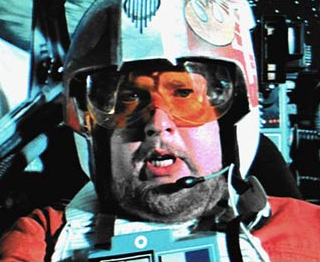
THIEF - Launch Trailer Thoughts/ Discussion on Stealth


In all honesty small response bits aren't my thing, but I figure as my commentary on design and production come from my personal experience with games I enjoy and making games I'd enjoy I thought it'd be good to include that other end of the spectrum. Traditionally indie development blogs showcase the creator's specific thoughts or commentary on whatever aspect of game creation they're currently working on, but they can also showcase examples of successful handle..ings of whichever specific content. The thief series is one of those good examples in a number of different design aspects. One of my personal favorite where it shines is "How to deal with open world without having the npc's become background fodder." or a little more face value "How to make engaging stealth." We're going to look at the latter for now.


One of my favorite aspects the stealth game -especially one of the former Theif series-  provides is this sort of player distinguished challenge. In stealth games the player has the option to wait and avoid detection, even if combat is imbalanced or the ai is boring, the ability to wait completely changes the dynamics of the player within the game environment. In the first Halo, on the snowy level there's a room right before the bridge where most of the enemies are asleep(I'm siting this from memory if details are off I apologize). Now, while most of the Grunts are asleep there are two patrolling Elites that upon spotting you will yell, fire their guns, and wake up the rest of the enemies in the room. Halo does not have refined stealth mechanics, it is not considered a stealth game; but as ai is triggered of line of sight, there is a crouch that aids avoiding being spotted, and gunfire triggers enemy agro, the game sets up scenarios that enable stealth gameplay. You could argue that every shooter has this and yet we don't consider every shooter to be a stealth game.. And I agree with you, the focus of using Halo is to break down stealth into it's fundamental concept without any refined polished mechanics so we can focus on the dynamics that occur in gameplay.


The first thing to note about this dynamic that results in a game being labeled a "stealth game" or having "stealth elements", is entirely dependent on the level design. Someone could just as easily take a Mario platformer -or any platformer- and design the level layout and the enemy placement to completely change the way the mechanics are used and turn it into a stealth game. This brings us back to the waiting element. The ability to avoid detection in itself is considered the most important element, the make-or-break, feature that decides the classification of a stealth game, but in truth it is only a half. When creating "stealth" mechanics the ability to avoid detection is only as good as the manner the game's layout presents waiting. These two elements are often treated as the same and in an aspect cannot be separated, but to better diagnosis the success of a games "stealth" they must be understood independently and viewed side by side. Like the chocolate chips, and the cookie, experienced as one and the same, but very different.


The quality of stealth in a game is understood to be predicated by the strength of the game narrative of why the character must hide, the exact context of why the player is avoiding detection. This brings an investigation of the game's specific fail state. In our Halo example the failstate is clear, you've woken up all the grunts and now you have to chase them around to kill them where before they were lined up on the floor for you, obviously as well there were less enemies previously so there is the threat of death with a harder difficulty setting. In the long run, that extra work of crouching and moving around the room to avoid the Elite's notice, and sneak up behind them, then sneak around taking out the sleeping Grunts, to accomplish that takes loads more time and energy with a minimal internal reward (having not spent those bullets). In many of these instances the player is purposefully setting the bar much higher then necessary with no tangible in game reward, without any provocation from the game. When you walk out of that room there aren't any gamer achievements that pop up for "no shots fired" or "silent death", the challenge is presented the moment the player sees the sleeping Grunt and the patrolling Elite. The layout provided a kind of telescoped game condition, yes the immediate game is to kill all the enemies and survive, but now can you do it without anyone noticing? Mechanically it's just another shooter but the game play allows for conditions to be set on-top of that, it's the level design and monsters that can then add stealth elements. Again, not the fact that you can avoid detection alone, but the manner in which you wait while avoiding detection. Look at Grand Theft Auto, there are no instances where anyone would confuse it with a stealth game, even though the notoriety bar is by definition a stealth element. If viewed with that feature alone it could be said GTA is a stealth game about hiding in plain sight, but we don't consider it a stealth game. Probably because if we're on a empty rooftop then fire off a sniper round toward a playground two miles away and take out someone the police are still on your case in five seconds. I mean really, Oswald got more time then that; there was no way they could respond that quickly. The line of sight is completely bogus, where I should have been able to hide on the rooftop without notice, the cops should have logically been running around the streets and alleys looking for a shooter for a set of time. But that didn't happen, the manner of waiting and ability to hide are not set in a way that allows "stealth" gameplay.


Even more misguided on this manner (in my opinion) is the Assassin's Creed series. This is more to a broken sense of failstate then anything but in this case the open world doesn't help. To be clear, I have a love hate relationship with this series; I love half the things the games do, I love the subject matter, I hate half of everything they do and the way the do half the things I love. Example, why be able to pick up and carry weapons without being able to unlock them, or at least sell them at the stores to then turn around and unlock them, and on that note why the hell is there even money when the stupid homestead is going to be making it rain a third through the game? If the player never worries about their in game coin purse going empty then money has no worth and basically no point. While we're no the topic, if the player can kill people -especially the heavies- quicker and more efficiently unarmed then actually armed with all the big expensive weapons, then what is the point of buying the weapons or even having them? Yes the combat alone is fun, but by making the unarmed option more viable the game undermines the entire point. And if you can stake up bodies and bodies of enemies without much hassle, what is the point of hiding? Now there can be instances where patrol routes and hay stakes are cleverly placed, but often times there the reason for not being spotted isn't a manner of avoiding fights, it's just this is what you've been told to do. If you get spotted it'll just give you a failstate and start you over. This feels less like the "stealth" dynamic and more "wait until they've lined up with spot a to press x" which functions more quick time event then.. well stealth. Just.. just don't get me started on that series.

Thief does it right, they focus the environment and interactions around their stealth mechanics. Where sight and sound play key roles in coming into and avoiding challenging combat the player abilities are all based around manipulating the environments visibility or sound, the objectives are set up for multiple entrances and the ai designed provide a multitude of approaches. In an article (in GameInformer I believe) a designer commenting on the Thief series said they figured the best way to present a realistic challenge to a burglar was to have a "simulated environment", everyone is just going about their business. If they find someone knocked out and mugged in the street they'll get the law. If they find a door closed when they had left it open they'll open it and look through the room. If the light in a room goes out they'll become more aware and look around and listen to see if anyone is there. If they're not a guard or armed when they believe someone is there they'll run and get someone to come back with them. The player is presented a challenge strategic challenge in the number of ways they can approach and deal with their obstacles, all within the bigger goal of stealth. In another game not being found might be a lesser thing, but in Thief where you are not the hulking warrior and any hostile creature has the potential to kill you, it becomes an immediately bigger thing.

.. trailer analysis.

There is gameplay in the family of the Thief formula, (the sneaking climbing bits) but the other thing that's noticeable is what appears to be either one of those (not actual gameplay/looks like gameplay ) cinematic trailer, a taste of what we might expect for a cut scene (doubt it seeing as there were other blatantly cut scene bits that fit existing Thief formula), or -more likely- a cinematic with what we can expect from scripted parkour/timed run segments (reminiscent of Mirror's Edge). And that is has strange effect on me, on one hand I really liked how Thief didn't have scripted gameplay events, sure sometimes the best way was to enter from this door, but there was never timed running bits with quick-time-event-slide-over-tables bits or anything, it presented a kind of freedom. But on the other hand, I reeeally liked Mirror's Edge and felt it's timed run segments were compelling and challenging, you had to think fast and preform the movements exactly. While that doesn't sound Thief to me, that does sound like a fantastic marriage. If this is the case I'm going to be optimistic and support whatever union of sneaking thief and parkour Eidos and Square dream up, until it proves otherwise. From what we've been given, in my opinion, the game looks like alot of fun. I just wanna wish best of luck to the developers, and God please let it be as good as I want it to be.  


Wednesday, April 24, 2013

Ouya... soon to be [M]

OUYA Revisited 

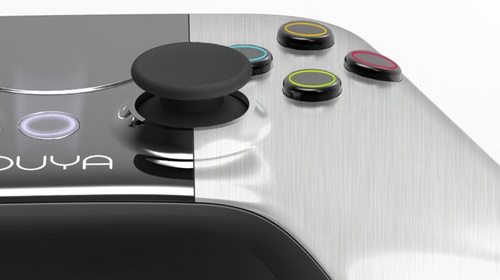
Well, it's been a while and this is soon to hit stores. That's right the 
$99 game console with the free to play market base has been realized. But, really, how realized is it?

The premise of the Ouya's creation is that game consoles don't need to be big and expensive to run games, and that games don't need to cost you an arm and a leg to purchase -could even be free, and that you should be allowed to mod and hack the crap out of whatever item you've paid good money for. Which, to anyone that understands economics, is a very tall order. And the Ouya was designed to set out to create and fill this non-existent space in the market. The idea was that with Android the console could be small and inexpensive, with a free development kit smaller and indie developers would flock to the Ouya and end up creating a flood of top notch titles, and with these titles and the console going for cheap chips the gamer demographic would turn to Ouya as a sort of console Steam on steroids. What went wrong? Well, first the Ouya isn't actually as powerful as the current Android phone you probably have. And second it's competing with the WiiU out, the PS4 right around the corner, and the whatever-Xbox over the hill. 

It's less powerful then all of these and does not have the line up we assume -and more importantly trust with our money- are coming from Microsoft, Sony, and Nintendo. On one hand the Ouya is far cheaper than these other consoles and now that Bioshock Infinite is out nothing seems to be massively grabbing the attention of the consumers right now. This could actually be the perfect time for the Ouya to come out. 

This whole, middle-market indie hot spot plan could really work, especially with the Triple-A Industry in the place it is and this supposed "crash" on it's way. This middle ground market will be the next big thing, if it's from the Ouya though, is still to be seen. This industry -like every industry- thrives on the social buzz of it's products, without the marketing the triple-A titles get the Ouya will inherently have less of a social buzz. Especially without the exclusivity of any high-profile IPs that other consoles have, by comparison the Ouya will inevitably fall into the background. But of course this is all speculative, nothing like this has ever happened before, and the Ouya's unique production and background alone set it apart from the corporate competition  so comparison is pointless, right? Wrong.

Along with it the units shipped to all of the kickstarter benefactors, Ouya is selling in Gamestop right next to the other consoles. It is designed and marketed as an answer and alternate to the higher priced models. In this consoles history, along with recognition as a trail blazer, the Ouya will be compared to the other consoles of the time. Something to note though in this industry is that in the long run a console's worth is not measured souly by the technology under it's hood or even necessarily the money it made compared to this history of all consoles; but by the quality and diversity of its software library. Where the big producers put massive amounts of money and man power into making a handful of titles each year and an even smaller proportion of that will be remembered in the following months the worth consumers place on their three-four hundred dollar device ends up behind the value of roughly ten, fifteen games. Even less if those titles are offered on other preferred more accessible overly useful platforms, say, a computer.

Don't get me wrong, I'm enthralled producers are taking more time and spending serious resources trying to create better products, that is the only way this medium will grow and stretch to its full potential; plus it adds a hard precedent that the smaller studios will have to compete with when creating their own interactive experience. But the time and energy put into creating the moreover lackluster product we see time and time again coming from the triple-A companies does not satisfy the demands of the customer; DLC and patches are only prolonged distractions that are sad attempts to make up for rushed workmanship or to hold the communities attention long enough to ensure they'll be excited for the announcement of the release of the next installment. When none of this works -in most cases- the community looks to satisfy their demands elsewhere. This elsewhere, tends to be Steam, or the digital indie community in general. Plain and simple, customers are more likely to drop ten dollars on three games than fifty on one. And this is where the Ouya has the upper hand. The WiiU has been out for a while now, and how many games have been released for it? The Ouya is not even out yet, and will have a confirmed library of over 500 titles! That's downright unheard of, imagine how many more developers will pick up the Ouya as its community grows. If we're assuming at least the people that backed the Ouya on it's kickstarter page are going to purchase one, you have 65,000 buyer market; which all sounds very profitable, but they've got this whole free to play market base. What's stopping this from just shriveling up from lack of income? We have no idea how that will turn out, nothing similar has ever happened before.

Well actually we have seen this before, and we've seen it succeed. Well not a platform, the Humble Bundle is a pay what you want series of indie game collections that are digitally distributed. Of course the designers give incentive to pay a little extra, if you pay more then the average you get extra titles or features; similar to how the Ouya has free to play with fees for extra features or bonus content. Even while customers are given the choice to pay a single cent for a handful of games the Humble Bundles have, as of February 2013, raised over 33.2 million dollars, with a good percentage of that going to charity. And this did not start off as the pinnacle of the mainstream indie games, these were the awkward and niche genres, the puzzle games and the sidescrollers. This didn't start with never before or exclusive titles, the most mainstream game on the first bundle was World of Goo; a game basically everyone already had, probably pirated. Still the Humble Bundle distribution continues to thrive and brings out more new, exciting, and different titles each sale. The Ouya not only has a chance, but it's very existence makes a pretty strong argument. The Ouya trusts and respects the customers, it trusts the customers to back products and producers they enjoy, it respects the customer's choice to alter a product they've paid for. Most important though, in my mind, the Ouya looks at its customers as friends, instead of as enemies or sheep. And that's something we need more in this industry.


 This was Steve Bullin with a revisit of the Ouya, if you like what you saw or you'd like to see a review of the actual product follow or subscribe to the blog, I will be purchasing an Ouya and reviewing hardware and software later on. Have a good day everyone,(I'm a liar) and don't forget to be awesome. ^^

 Links- Humble Bundle, Ouya


Wednesday, April 17, 2013

Exposition and Micro-Narrative

EXPOSITION AND MICRO-NURRRATIVE
By
Steve Bullin

As mentioned in Games Need Better Storytelling part 2, exposition is the integral part of storytelling that delivers the context needed for meaningful world interactions to the player and.. well dang-it here; Extra Credits did a bit on Exposition already. And I guess this should be here too. Anywho, without exposition done well the player will either tune out of the games story and not know what's happening or are less likely to care about what does happen. I bet there are people out there now saying "We'll I don't really care about story, I just like multiplayer and shooting things.", I'm tempted to tell you to leave right now.. But I know that's just because you've become accustom to terrible stories in games. Everyone has those moments they've just started playing a game and they just can't get themselves to care enough to keep playing. They toss the controller aside and turn of their console(or computer) and say "This is so stupid. Why does the game even have me doing this?". And HAHA, you've just proven my point. Narrative is the justification of actions, without it, we don't feel or understand the drive for anything to happen onscreen. It's like reading a very, very terrible fan fiction or .. story written by an inexperienced author. Things like explosions, and gun scenes, and the hero making out with the girl are there just because. And because the creator simply wanted it -without any internal logic or reasoning behind the events happening- the reader really can't get themselves to enjoy, much less understand, the piece. 

 
Of course there are games like chess or checkers that some might argue have no narrative, to that I say hogwash. Narrative does not always have to embody the form we regularly associate with "story", it simply has to establish a purpose. You draw O's to make a line or cut off the other player's line of X's and win. You move the pieces on checkers to hop over and eliminate all the opponent's pieces. You move the specific chess pieces in certain ways because they each have different titles and properties, you do this to corner the opponent's king. The frog crosses the road and river to get to the other side. You shoot down the missiles because they're nukes and will blow up whole towns and you'll lose. Now the exposition in these simple cases like chess or checkers would simply be the rules. To win you have to corner the king, to corner the king you have to set up a number of your pieces that will entrap him without being at risk of being removed in the following turn themselves. To do that you have to understand the movement of each piece. And there on would be a description of the movements and rules each separate piece abides by throughout the game. 

The same is true (and better explained) with the narrative of Frogger, getting across the road requires you don't die. Dieing is the narrative behind an event that causes and end game, where crossing the road or river is the narrative behind the player moving up the screen. Surviving and getting across without causing an end game is the narrative behind winning the level. Ergo the exposition behind all of these things is the game's explanation of how the narrative fits behind the mechanic and progression of play. When the player causes this end game it was because they were hit by a car, they drowned, ect. The exposition is accomplished in these early forms by graphics and sound effects, and nothing has changed. The narrative behind why something could be in these life/death situation is a frog on the highway near a river. The narrative behind the mechanic of movement is jumping, the exposition of this is the sound effect and the animation of the pixel frog jumping. Likewise the exposition of the frog entering an end game is the death animation and sound following an event that would cause an end state. The exposition delivers the context needed for meaningful world interactions to the player. Avoiding or chasing the pixels on screen mean something and provide the drive for the game, the exposition explains the narrative and creates the framework for the experience.  

(this guy does a bunch of great game recordings check his channel out here)

I'm certain all of us have had moments where, without that framework, we were unable to appreciate an experience. When we were real young and we couldn't figure out the controls we still loved the movement onscreen, but got upset with the game when it didn't do what we wanted. And remember that moment you first picked up a game and really got the controls? It was as if a whole world was opened up to us onscreen. Because of the impute-response and the exposition-narrative on top of it we acquired an understanding to that impute-response happening onscreen and were really able to immerse ourselves into the world. We could feel this sort of kinetic projection between ourselves and the avatar onscreen. We think jump or shoot in our heads and it translates to actions onscreen, our avatar gets hit off a cliff or we misjudge a jump and cringe when we see them fall to their death. We could project ourselves as the character onscreen. This kind of self projection onto the game avatar makes every in-game interaction more intimate and engaging for the player. Here is where dialog comes in. 

How fun is it watching people lean when making a turn?

In truth dialog is simply and extension of the exact same exposition to narrative as mentioned before, it is simply a different form. Similar to how death sound is similar exposition to death animation, it simply engages the player differently in providing that context. End game death text -along with opening menu and file loading- might be one of the most perfected handling of dialog exposition in game simply because it provides pacing and doesn't interrupt the standard gameflow within the piece. It forces that moment of pause and makes the player wallow in their moment of failure, while also giving them time to calm down, or deescalate from the tension of the situation they were in at the moment of the end game. It's like catching your breath before running into battle, it allows a moment of mental preparation and allows the player to feel their triumphs are more meaningful because they were allowed a moment to pause and reassess the challenge before them. Giving that time for players to analyze the game's challenge and strategist attaches that much more meaning to gameplay and different mechanics as they are introduced over time. 


You know when-


-Alright, alright. Dialog exposition. 

The movement in gaming for the past... probably longer then I've been around. Has been to better convey story, character, plot, narrative, within games and to make those characters and story more real and meaningful to the player. I'll take a shot in the dark and say that's actually been the underlying movement throughout entire history of games. But to speak specifically about video games, the movement has been to expand the narrative and world of games through interaction and plot LIKE NO PLAYER HAS EVER SEEN! We see this through the obsession of dynamic choice, more realistic graphic, more realistic physics, character design, character and world interaction, ect. But the simple fact of the matter is that all these things boil down to a flashy exposition of a, normally less then flashy or interesting, narrative. This is where exposition and narrative in games fail, they provide context for a shallow, dull, or downright overplayed narrative. If that narrative is not something players can really relate or get attached to then the motivation built behind everything in the piece is lost to them. All the novels worth of text, dialog interactions, or whatever interactions onscreen that give us context cannot make us interested in a flat world. Now there are a dozen things that can debunk a narrative and ruin a game, but a good example might be those really poorly made web based games. I'm more talking about the, shoot the watermelon or stomp the cockroach, kind of games then FarmVille. The narrative in those games is weak; not just because they're punch, shoot, crush the thing games. But because that's the entire narrative, do this action, "Win a Prize!"; but we know that's a scam so the only narrative is the action itself. The exposition of some watermelon exploding or some cardboard cutout figure getting hit is the reasoning behind the interaction, flashy exposition with an uninteresting narrative. 

Narrative and exposition are two sides of the same coin, the story and the means of storytelling. As we've seen one does not exist without the other even in games without dialog or much in the way of narrative. The best way to learn balance in my opinion is to study experiences that use the least number of forms of exposition as possible to better acknowledge and understand both the underlying narrative and the exact lengths the forms of exposition go to convey the moments of narrative in a game. In other words we should be look at games that have no dialog (or very little) to better understand the importance of it and the importance of just leaving it out when it's unnecessary. By understanding the depth and level of story and characters that can be conveyed through exposition that's easy to include without the slightest break in the gameflow we can more easily study and come to understand the impact of exposition and narrative on a piece. We can learn from games like Journey, the classics from the arcade era, from studying the silent protagonists within Portal, Half Life, Zelda, and mountains of others that I can't think of right now because it's really late. But we'll talk more about those fun specifics in length later.^^

For now, good night everyone, and thanks for tuning in.


Thursday, March 21, 2013

GAME MOVIES

So I almost forgot. I did a bit on theory of translation between games and film. Here is dat.


Hi there. I do things

Ya know, I really do want to keep getting my posts up here. I do. I have a few half done in the drafts that I chip away at every so often. But really there's this other thing I contribute to which is a little more important.. because it's for school and not just fun. 

Here, this is KineCritical.


Our facebook page gets some super interesting posts. 

We're also on our school/internet radio and do podcast about film news and other fun cinema related things.... sometimes we talk a ton of superheros and games... We get distracted. All good stuff though. So watch the Facebook page and we'll let you know when we're live.

And we also have a twitter; encase that's what your into. 

So yeah, on top of the standard student load I do dat, so if whatever Netizens that find there way here feel discouraged by activity and would like to see more of my thoughts (mostly half baked drool) then just comment or send me a message and I will find the time and put something out just for you! Seriously though I will. There is nothing more rewarding then someone enjoying your work.

P.S. I am actually very regularly working on a game related project with a number of  wonderful talented like minded individuals when it comes to games/game theory. 
(this is how I justify sneaking this in) 
And once completed you will be the first to know. ^^

Tuesday, August 7, 2012

Christoph Hartmann's "Photo Realism" Interview Response [E]

Author's note - the promised episode is on its way, but current events are current so.. here.

PROLOGUE


I first heard of the interview with Christoph Hartmann ,the head of 2K games, interview about 2K and 2K's views on the future of the industry that resulted in Mr. Hartmann's comments about Photorealism from the Jimquisition on the Escapist Magazine. But before I let my artzy fartzy designer side of me start ranting I did some searching and found the full interview. Give it a read. To be fair to Mr. Hartmann I'm going to include both the question and his answer from Gameindustry.bliz with each of my responses.

 
INTERVIEW RESPONSES

The interviewer, Gamesindustry US editor, James Brightman goes through the interview asking the general future of the industry type questions and for the most part Mr. Hartmann gives pretty standard (in my opinion, non-committal) answers. About two thirds through the interview though are where alot of people starting to disagree with Mr. Hartmann.


MOBILE GAMING: CONVENIENCE VS QUALITY? 

James BrightmanOn the mobile front, a lot of traditional publishers have been having a hard time adjusting to that market. EA has done well, and Activision recently launched a mobile brand, but how does 2K look at tablets and smartphones? Is that going to be a big growth opportunity for you at some point?

Christoph Hartmann - It definitely is a platform and area that we are looking at very closely. If you look at Civilization, it was one of the best-selling games on the iPhone and iPad. We definitely are committed to that area of the business. We're definitely looking at other IPs that we have to see if they work on mobile. We're not just going to take some random IP and throw it on there. We're going to make good games, and we're also looking at doing something original one day.We don't think it will be a revolution to the business, though. No one will ever be able to replace the power of the console business - having a console with that power and the opportunities for quality games is very important. And while being able to pick it up and being convenient is a big thing, and your phone and calendar are there, playing and carrying around games is nothing new. It will be a larger part of the market, but it is not the holy grail of the market and the business. Look at the history, there is a place for everything, but I don't think anything is ever going to replace the consoles given the maturity of the market.


Response -  Alright... well sure being able to play and carry around games is nothing new, but the fact that we're not only talking Nintendo while doing it is. Nintendo has dominated the handheld market and nothing has been able to compete simply because pushing a new device to compete against Nintendo in the mobile game market that's just about been branded Nintendo Territory was inconceivable. You bought Nintendo handhelds because you were looking for the IPs that you've loved and the handhelds could constantly support that kind of game style its demographic was nostalgic of and, in relation to the rest of the industry, starved of. Secondly Nintendo has a solid reputation as completely family friendly, parents want an mobile entertainment for their children that they know will put out plenty of games they consider age appropriate. That was a business model you just could not compete with. But to introduce gaming to an already universally used and owned mobile device, finally with software capabilities that can stand up in that market, you've just revolutionized the industry.
Mobile games brought in an entirely different demographic to the industry and also brought back more of the older game styles; arcade rail shooter, side scroller, shoot'em up, and brought new ones that designers would never have considered feasible in the market to the mainstream. The Indie industry had an entirely new platform that was easy to attain and approach for design and innovation, the old school styles of play and throw back gameplay that the indie crowd had always catered to were suddenly in the attention of a larger demographic then ever before. App mobile games are one of the most affordable way for large and small studios to make creative innovative risks. If you're wondering what kind of art an app game could bring to the industry then just take some time looking at Super Brother's Sword & Sworcery. Mobile games re-energized the industry, bringing back the lessons early designers had been forced to discover to get around because of their technology's limitations.
The largest point of this argument though that I will press though is that the amount of material and capabilities put into a game do not define it's quality. Some of the greatest moments in gaming have not been built because of flashy new technology, they've been built by designers and writers who have worked together conscience of the resources at their disposal. It was about working around your limitations to make the best experience possible. To quote Stranger Then Fiction, 
"... who in their right mind in a choice between pancakes and living, chooses pancakes?"

"Harold, if you pause to think, you'd realize that that answer is inextricably contingent upon the type of life being led... and, of course, the quality of the pancakes." 
The metaphor being living as these massive budget, visually and mechanically impressive works. And the pancakes being a smaller work with a stronger design and execution. 


DEATH OF THE CONSOLES: SLOW AND AGONIZING 

James Brightman - I met with David Jaffe at E3, and he said that he thinks consoles will become dinosaurs after the next generation. He says next generation is probably the last generation now that things are going digital with smart TVs and cloud gaming. It sounds like you disagree completely with him?

Christoph Hartmann - I semi-disagree with him because the way your games are going to get transmitted from one source to the gamer might change, but I'm talking about big, huge quality games. It is like how people consume food. Fast food is on the rise and that has to do with our lifestyle, but there are high quality restaurants that are not going away. When I talk console games, I'm talking about huge experiences with many hours of gaming... and you will always need a major platform for those titles.
I don't know what we will have in the future, maybe a PS 15 or something, but we will need the hardware. It's like in the software industry, the software pushes the hardware; there's a give and take and it's the same in video games. We need machines built to perform well in one area, and that is gaming. You're never going to be able to compete with it because it's about quality and it's built to do one thing best. And, by the way, the whole streaming and cloud thing is just nice words until the [internet infrastructure improves]. I don't believe in cloud gaming until a cable provider stops breaking my internet connection every morning, when everyone logs in at the same time. I don't see this being fixed for a long, long time.


Response - Well, again, quality is not defined by the tech under the hood. Technologically impressive games come out all the time and no one even bats an eye, in this era change and technological improvement is common place, the true drive is always within the new use of technology. In this media technology has opened up thousands of possibilities, but it's the use of that technology that creates engaging experiences. With physical distribution production costs so high publishers are slow to greenlight anything that's not similar to whatever has recently been the most profitable on the mainstream market. That's not a recipe for a innovation, that leads to stagnation. With the digital distribution market growing so rapidly due to a better retail situation and infinitely better convenience eventually the consoles as we know it today will becoming obsolete. Notice how the newer generation consoles are trying hard and harder to be more then just a gaming console, it's because companies just can't get customers to justify paying the prices the companies want for something that's just another game system. How exactly and to what extent digital distribution will eventually change the video game industry we just can't know. We've only begun to grasp the full implications and possibilities of an internet hook up with multiplayer, look at Dust 514 and Eve online. The shift to fully digital gaming will for better or worse completely change the landscape of gaming, and the changes in the industry thus far because of it are just the tip of the iceberg. 


VIOLENCE IN GAMES AND BETTERING THE MEDIUM: PHOTO REALISTIC

James Brightman - What's your reaction to Warren Spector and his talking about how today's games are overly saturated with violence? Obviously, a lot of games in the 2K portfolio have plenty of violence in them. Do you think developers should be working to make other types of games not steeped in violence to help the maturation of the medium?

Christoph Hartmann - It's something that comes up internally a lot and in product development. What's the difference between the movies and gaming? Movies you just watch. You get emotional involvement in both, but in gaming you interact. That limits you already in what you can do, as certain emotions can't be recreated. Recreating a Mission Impossible experience in gaming is easy; recreating emotions in Brokeback Mountain is going to be tough, or at least very sensitive in this country. It's limiting. Comedy is already very hard in video games. You can't have a game simply built around comedy. It has to be part of an overall vibe. So there is only a certain area that you can use [to create games] and then you look at technology, you can kind of maybe make people look right, but it will be very hard to create very deep emotions like sadness or love, things that drive the movies.

Until games are photorealistic, it'll be very hard to open up to new genres. We can really only focus on action and shooter titles; those are suitable for consoles now. If someone comes up with a video game where it's all about you falling in love, where you have the emotions and you don't need a lot of interaction from your device, that's great but what happened to those interactive movies from the '90s? They were boring. It was like a movie that gave you three endings.


Response - The notion that only with a fully photo-realistic range of facial and body expressions that games will reach their full potential as a medium is.. well, it's ignorant to the theory, maybe even law, of all other forms of artistic medium. First in defense of non-photorealistic visuals, I'd like to site the entire animated film industry. Disney, there, how was your feels trip? This argument's over... right? Well no, simply because we feel we know something and we feel that examples we bring out prove the opposition wrong doesn't mean we've won. What we need to do is explain and understand the phenomena beneath our stand at its base. We know it's right, but we need to understand why it's right. Which for games (as a fledgling medium) might seem difficult, but lets be honest it's only difficult if we're lazy. Hundreds of years of arts have built up to this interactive medium, there is no other form of storytelling and expression that can take and adapt from more other existing forms to creating unique experiences.

LET'S GET STARTED
To understand a game as art, you first have to view it as art. You have to notice all the elements that go into it that create a completely unique experience in relation to other mediums, and in that you just can't relate it to other medium because they don't measure off the same theory in design. Art, at its root, is expression, but here's a better definition for our purposes. Art is the expression of real world beauty through the artist's interpretation. Meaning that all works of art are simply an interpretation of reality.

A QUICK MOMENT IN ART HISTORY
Pablo Picasso as child prodigy could draw photorealism (as the eye sees it) from the age of eight. It was within his later works that made him famous where he played with proportion and his representation of reality. Art has never truly been about replicating reality in the world, it has been about how to represent the beauty of the world. It's in interpretation, not replication, where an artist can really convey emotion to the viewer. Look at these two...

Which of these two stand out stronger, which seems to stimulate more, which makes you think and feel more?

BACK ON TRACK: CONVEYANCE   
The human mind and perception is a wonderful thing, we can look at proportions and representation of a human figure that is completely unnatural within the human world and still understand it to be human. Even in giving inanimate objects human like features we can mentally connect with the work as a representation of ourselves.

Exaggerated human like features and expressions prove to still powerfully convey emotion. With this phenomena the full range of human emotions can still be powerfully conveyed within an unnaturally proportioned representation. The catch is how accurately they can represent (not replicate) the emotions and convey the emotional situation to the audience.


UNCANNY VALLEY
Course, there is a powerful downfall to this phenomena, the Uncanny Valley. Teddy Bears were an instant hit, not because they looked like bears and were named after a popular president, but because their proportions were based of human babies. The slope is where proportions or expressions are close.. but just off in the wrong way. Then it becomes just creepy or unsettling and all feeling of connection or empathy with the subjects are completely lost.

Just... look..

Which one wants to watch you from outside the window and hug your dog too tightly?

CONCLUSIONS
It's in understanding all these things and all the subtle aspects of human interaction, and then taking those into account throughout the entire design and production process that video games can accurately portray strong emotions through the characters. They don't have to look like snapshots of reality, they have to look like snapshots of real life interaction.

It can be something as small as characters holding hands.


And without looking at the graphics, or even getting a glimpse at the faces, that connection between the characters are conveyed.

We can see those emotions and we understand them as a representation of our own feelings, we can empathize. We could create a Brokeback Mountain for gaming, but the reason we probably wont right now is more because of the political environment then our technology. When there are things like Chick-fil-A going on, how many producers would greenlight something like that? For this medium to transcend purely entertainment and to become an art we first have to have an industry that sees itself as creating art. It doesn't have to mean all art-house kind of games but more that are made by designers that see themselves as artist, in their own sense, within a creative medium. If we don't think we can achieve a status of art yet, then we wont be looking for a means to.

IN HARTMANN'S DEFENSE
In Hartmann's defense, as far as he's concerned, you can't convey a true range of emotions yet. In a market where shooters are the one reliable project to return a profit, how often does a designer really get a chance to explore a range of emotions? The largest demographic of the market want first person, and in first person as you are looking through the eyes of the character you might expect -to a degree- the world to look photo-realistic, as the eye sees it. The main demographic is white hetrosexual males ages from high school to college, the demographics are growing to include more then that sure, but still at this time what the industry produces is still generally governed by the most marketable items to that demographic. Violence & fighting, guns, sexual pandering, you get the picture. Then how do designers break this mold?

Well, actually they do it by not breaking it, they stretch it. They use what is popular to create art and expression in the game experiences they mold. Like basically, all other artists... Sure we haven't figured it out entirely, but no medium has, and we are learning. Take a look at the outcome thus far.  


In our own manner we have created art, we've conveyed true emotions and characters that the player connect and feel empathy for. And we've been doing it for a long time, we can't look at other mediums for comparison; because we have plenty of amazing moments in gaming history that convey powerful experiences to the player, those moments are what we have to learn from to better our medium and the emotional experiences we convey to the player. And that's just about all I can say on that. Until next time, thanks for tuning in everyone. If anyone has any comments they'd like to add to the discussion, feel free.


Wednesday, August 1, 2012

OUYA, the Argosy of the game industry? [E]

OUYA

I'd like to mention OUYA, because it's awesome, and you have a little under a week left to donate to such an awesome cause. For those of you that don't care to follow the link, or would rather not read the description, or watch the video; Ouya is essentially the next Steam only in console form. A product that for $99 promises free-to-play titles, fully digital distribution, and endless possibilities. Not to mention they fully encourage their customers to mod and hack the crap out of their system.
I'm just going to mention my first, pre-release thoughts, you can't properly review something unless it's been out for a while. So at some point in the future I'll do that, but this is pretty big news and still respectively current, so it deserves mention.

The Ouya is built on Android, so essentially anyone that has the know how and the productivity can make anything they want for it. No transactions necessary, straight from your hard work to the customers to enjoy.


Now if new or indie developers are wondering how a game is suppose to make money on a free to play market system then no worries. First it promises that at least a demo will be free; in game content, extra features, as well as micro-transactions are expected to be a part of how this system works. With so much of the production and marketing steps cut away games on this system will (probably) mostly be judged by their merits alone, and creating a better longer last experience for gamers will be the first priority, because that should earn the payoff in this system.
I assume alot of people are envisioning this as the next Steam or even the Godsend to save console gaming, but I'm thinking it'll end up more like the Tumbler version of game systems. A little cluttered and for the most part a large niche group who are devoted users. Though overall a survival of the fittest outcome, there will be a crap ton of bad games and things that bring up entirely new problems for the media, but in the end the cream will rise to the top and we will have some amazingly ingenious and entertaining creations that we would otherwise be without or never hear of. Like Steam I think that the competitors will come up with their own slightly different versions hoping to edge their way into this market, but unless they outright change their business practices (Microsoft probably won't) they will end up being left behind.  

Overall I'm very optimistic, utilizing science and technology for the bettering of the state of the medium, there's not much of a downside to this really. The first thing that comes to mind is that this could be the Agrosy magazine of video gameing; the short pulp fiction magazine that through the depression not only started a business format that brought out some of the most well known names in fiction, but maintained sales through the worst economic time in US history. Yes there was a decline in pulp magazine sales during the WWII paper shortages, but with digital distribution and an open source operating system I don't think the Ouya has anything truly stopping it. As long as these caped crusaders keep in control of the Ouya and run it the way they are preaching they will, this is going to be something very good. If it does well or not, this is going to be a part of gamer industry history. As far as I'm concerned as a gamer it's kind of like this,


But mostly that's influenced by my views as a commentator on the industry, as a designer, and well as a customer. I feel like this will actually be a part of the solution to the ridiculous status of current triple-A title reality and the quality of those games; not to mention the Gamestop "used-game-racket" "problem".   


VIDEO EPISODE TEASE

Onto the second order of business, the entire reason I started this blog is because I have aspirations. I have views and opinions that -I believe- are unique enough ever so often that they should be mentioned, at least put somewhere so that at least one more voice is in the conversation. Hopefully someone will  think about something in a way they didn't before. That being said my first episode is going to be my direct response to a video by Bob Chipman, the Game Overthinker,  I know that's very lame because it's indirectly sort of sapping of something that's already popular by someone that's worked and earned their reputation. I'm not going to just put my response in the comments because that's even lamer, I'm no Heckler, If I have something negative to say about someones work I' want to do it in a manner where I can receive the same scrutiny that they're subjected to. 


To be completely honest though this the best way I could start out the ComplexToy show. Mostly because this specific episode was the first time I -sitting at home talking to myself- raised my hand and said, 'but wait, what about..?' That moment was one of the first times I really connected things I have read and my own views and opinions into something that has otherwise to my knowledge not been fully represented within the popular game media. And I was inspired to look deeper into that specific topic as a whole and start building a broad thesis. 
Now the topic is pretty dense, and this is my first time doing this, so I'm putting as much effort and time into this to get it right for you guys. I want to be as clear and concise to my thesis as possible while still covering a lot of angles on a topic that might as well have a few books souly written exploring it's theory. Probably in a few weeks from now I'll put up a post containing the finished product. Your hint is it's the response to an answer.  Hope I didn't make it to obvious. Thanks for reading everyone, hope you'll stop by later for more discussion on games and the like.   


Sunday, July 29, 2012

Introduction Ladies and Gentlemen

ComplexToy 

ComplexToy is a blog about Video Games, it is a combination of responses and arguments on the design and production of games within the triple-A and the indie industry.

I'm not going to pretend to be the next anyone big, I'm simply going to put out the views I have as a designer that haven't yet (to my knowledge) been represented within the industry's popular media. I'm not going to promise anything weekly or anywhere near that active simply because I have larger responsibilities and I'm not going to put up anything other then the best I can intellectually produce for this channel and blog. This is as much a space for me to voice my thoughts as it is for me to collect them and actively take steps to be more active within an industry and community that means so much much to me, and that I have ignorantly thought I knew so much about. This is a project to force myself to actively research and participate in the industry to better prepare myself for a career of sorts someday.


FORMAT

Now besides each post having a title I'm going to put an indicator in the post's title to give you a better idea how I'm treating the topic, the length I'm going into and just a little of what to expect from the post.

You're going to see three kinds of posts.

Development- which will include personal commentary and advice on the process and development on game creation/ business and industry practice, tutorials and reviews of game creation tools (game making programs/ image editing programs/ music makers/ educational materials/ ect.),

Critique- Either a game or game culture thing that I look at and feel like commenting on. Let's plays, reviews, and the like.

Article- Either a link to a published article or a commentary on a topic of games as design, medium, art, storytelling, or culture that warranted a substantial response.