Tuesday, October 22, 2013

MOTHER OF GOD YES

Oh lord.. That was painful. 

Alright, so DeconstructionCraft is the Bi-weekly column I'm contributing to, and that first argument was a pain. Not just because it covers philosophy of language, and philosophy is something I have limited experience in, or because Wittgenstein is both difficult to grasp and brilliant, and therefor hard to argue.. But because I both procrastinated and had little expertise with the site... last minute finding banners and stuff is irritating. 

 That's all good though, best way to learn. I've gotten one of the most difficult ones checked off the list. What defines a Game. I feel like that should be etched in gold on a varnished board someplace for any game culture journalist when they really dig into the philosophy of that question. Because games really don't exist you know... same with art.. or stories.. They're just made up. Here's my post if you're interested.

Tuesday, September 3, 2013

Keep going indies, big dreamers, and risk takers.

For Dreamers

It really sickens me the number of drafts I see in my post list, and how many of them are basically empty. Tons of articles, started, not finished.

Getting back into the swing of things is rough, school, work, relationships, there's always something. And really that's just life, learning to deal enough to move past the low times is essential and part of everyone's development; keeping true to yourself and keeping good people around you in the process is part of true happiness. And of course all of this is very difficult, though entirely worth it.

To bring this back around to topic. It's really hard to keep going with all of those dreams. This is why we aspire and hold those successful and happy people we see in life in such high regard. The only problem there is we see these more successful people and instead of seeing inspiration so often we get the "Man I could never be that good." gut response and don't try. Unless of course, we actually have no idea the level of work and dedication that's gone into their success, which is where we respond with "Bah, what a idiot, I could do that and be famous." Which is two parts incorrect, one part obvious.

Bit of Reality
And here is my point, the I could do that is where you succeed. That's all there is too it. Add on the assumptions on how much work is actually behind the success and the assumption that you'll wind up famous and you're horribly mislead. You can't know how much work goes into, making a game, writing a novel, creating an internet show, whatever, until you actually do that thing. And you'll never know how much goes into doing that successfully until you do it to completion, and then continue doing it, while enjoying yourself. If you hate what you are currently doing, then you're doing it wrong. Not to say you're doing the wrong thing, but you're doing it wrong. Living the dream is not about the endgame, it's good to have goals and strive towards them, but if the goal is too high for you to feel good about yourself while striving for it, then you're not living the dream. Every goal, every project, ever path, has set backs. Some harder then others, but you will eventually hit all of them. The key to success, is not staying down when you've tripped over the first, dozenth, or millionth set back.

The key to successfully being successful (actually having the enjoyable lifestyle you dreamed of) is not living for the lifestyle, but for your passion. If you see yourself taking entire days just to write the next best selling novel or spending hours behind the computer to be hailed as the next genius video game designer; then you're going to be miserable and you probably won't be very good at what you do. That's because it's only the people who care about what they're doing, instead of comparing themselves and their work to others, are the only ones with the mindset to focus on carry on through the hardships and the setbacks; because they see they're doing what they love, that's what makes them happy, and that's what they go to when times are rough. Of course these people make it look easy, they have the right mindset. Instead of living for their goals, where only in achieving those goals does someone feel fulfilled; they live for their art, where in simply partaking in their art that someone finds joy. Now this might sound like hippy talk, we've had so many people in our lives insist you can't live off dreams, that you need to work for this "backup plan" before going out and doing what you want. All of that I find defeatist and nonsensical for 4 simple reasons.

1. If your goal in life is to have a solid "backup plan" to your dreams, then you will be miserable. 
Because not living with something you truly feel is your propose, is miserable. This is why boring adults have children and then feel better about themselves, because they want and need propose. (not implying that parenting is an empty replacement for any higher cause)

2. Living the dream does not mean being ignorant of reality. It does not equate to quitting your job, leaving your family, and living as some hobo painting the faces of celebrities onto sneakers on the street. It means gearing your life and actions towards self fulfillment while maintaining your responsibilities. Paying the bills, being a parent. Continuing to be in the life of those that care about you. Every action is an investment; measure the cost and return of time and money put in and how much joy and profit you receive out of it. No it's not all about the money, but if what your doing is burning a hole in your wallet/purse to the degree you can't life comfortably and need it as an escape from your situation, then you need to be mindful of your spending with your financial situation. (this is where the comparison of games and drugs come in) If you have student lones you have no business flying out to Florida on vacation with friends or buying two of the next gen consoles, unless you get a serious discount and budget the rest of your year to make up for it. It's about finding a balance between a lifestyle you and your family can feel content with, while doing something that makes you feel better about yourself.

3. There is too much offered in life to assign yourself to "plans" for the future. So much will happen, some opportunities will never present themselves meanwhile others will bombard you daily. Being attentive and listening will show you how much the world has to offer on a daily basis, being honest to yourself will let you see what you should/can do to better yourself, and acknowledging you might be wrong and you probably have more options then you think will let you take steps outside that comfort zone and live a life and be happy when you didn't think you could. Don't limit yourself, simply be honest with yourself. It is only when we are dishonest with ourselves that we end making decisions we will one day look back and regret.

4. Yes it is true that we are only assigned one lifetime, and careers are years in the making. But that doesn't mean after you picked a career in high school or got promoted at your day job that you're stuck in one destiny. There is no such thing as a point of no return. That doesn't qualify wasting years of your life doing nothing with the 'plan' to turn it all around down the road. It simply proves no one is truly lost, they're just ignorant of their standing. It can take only a second to find your feet and then the light. You don't need to force yourself to be content with a life you don't want to live.

So all of you who think you're no good, or that you've fallen too low, know that you're wrong. Know that the only thing that's stopping you from finding your footing is the fog of your own self doubt. That true honesty and having a passion can be light enough to clear an easy path. And that the path is never easy, but when you know you love it you don't notice the effort. And know that the fact you can start off and do this without effort is proof that you are strong and have the potential, and therefor all the requirements to live a dream. So never give up. Even when it's hard and you don't want to continue for the strain, reach out; there are others with your dream that have been in you low and will gladly lend a hand, because they know only thing worse then finding yourself in those low places, is seeing someone just lay there.

Good luck to all of you.

Wednesday, April 24, 2013

Ouya... soon to be [M]

OUYA Revisited 

Well, it's been a while and this is soon to hit stores. That's right the 
$99 game console with the free to play market base has been realized. But, really, how realized is it?

The premise of the Ouya's creation is that game consoles don't need to be big and expensive to run games, and that games don't need to cost you an arm and a leg to purchase -could even be free, and that you should be allowed to mod and hack the crap out of whatever item you've paid good money for. Which, to anyone that understands economics, is a very tall order. And the Ouya was designed to set out to create and fill this non-existent space in the market. The idea was that with Android the console could be small and inexpensive, with a free development kit smaller and indie developers would flock to the Ouya and end up creating a flood of top notch titles, and with these titles and the console going for cheap chips the gamer demographic would turn to Ouya as a sort of console Steam on steroids. What went wrong? Well, first the Ouya isn't actually as powerful as the current Android phone you probably have. And second it's competing with the WiiU out, the PS4 right around the corner, and the whatever-Xbox over the hill. 

It's less powerful then all of these and does not have the line up we assume -and more importantly trust with our money- are coming from Microsoft, Sony, and Nintendo. On one hand the Ouya is far cheaper than these other consoles and now that Bioshock Infinite is out nothing seems to be massively grabbing the attention of the consumers right now. This could actually be the perfect time for the Ouya to come out. 

This whole, middle-market indie hot spot plan could really work, especially with the Triple-A Industry in the place it is and this supposed "crash" on it's way. This middle ground market will be the next big thing, if it's from the Ouya though, is still to be seen. This industry -like every industry- thrives on the social buzz of it's products, without the marketing the triple-A titles get the Ouya will inherently have less of a social buzz. Especially without the exclusivity of any high-profile IPs that other consoles have, by comparison the Ouya will inevitably fall into the background. But of course this is all speculative, nothing like this has ever happened before, and the Ouya's unique production and background alone set it apart from the corporate competition  so comparison is pointless, right? Wrong.

Along with it the units shipped to all of the kickstarter benefactors, Ouya is selling in Gamestop right next to the other consoles. It is designed and marketed as an answer and alternate to the higher priced models. In this consoles history, along with recognition as a trail blazer, the Ouya will be compared to the other consoles of the time. Something to note though in this industry is that in the long run a console's worth is not measured souly by the technology under it's hood or even necessarily the money it made compared to this history of all consoles; but by the quality and diversity of its software library. Where the big producers put massive amounts of money and man power into making a handful of titles each year and an even smaller proportion of that will be remembered in the following months the worth consumers place on their three-four hundred dollar device ends up behind the value of roughly ten, fifteen games. Even less if those titles are offered on other preferred more accessible overly useful platforms, say, a computer.

Don't get me wrong, I'm enthralled producers are taking more time and spending serious resources trying to create better products, that is the only way this medium will grow and stretch to its full potential; plus it adds a hard precedent that the smaller studios will have to compete with when creating their own interactive experience. But the time and energy put into creating the moreover lackluster product we see time and time again coming from the triple-A companies does not satisfy the demands of the customer; DLC and patches are only prolonged distractions that are sad attempts to make up for rushed workmanship or to hold the communities attention long enough to ensure they'll be excited for the announcement of the release of the next installment. When none of this works -in most cases- the community looks to satisfy their demands elsewhere. This elsewhere, tends to be Steam, or the digital indie community in general. Plain and simple, customers are more likely to drop ten dollars on three games than fifty on one. And this is where the Ouya has the upper hand. The WiiU has been out for a while now, and how many games have been released for it? The Ouya is not even out yet, and will have a confirmed library of over 500 titles! That's downright unheard of, imagine how many more developers will pick up the Ouya as its community grows. If we're assuming at least the people that backed the Ouya on it's kickstarter page are going to purchase one, you have 65,000 buyer market; which all sounds very profitable, but they've got this whole free to play market base. What's stopping this from just shriveling up from lack of income? We have no idea how that will turn out, nothing similar has ever happened before.

Well actually we have seen this before, and we've seen it succeed. Well not a platform, the Humble Bundle is a pay what you want series of indie game collections that are digitally distributed. Of course the designers give incentive to pay a little extra, if you pay more then the average you get extra titles or features; similar to how the Ouya has free to play with fees for extra features or bonus content. Even while customers are given the choice to pay a single cent for a handful of games the Humble Bundles have, as of February 2013, raised over 33.2 million dollars, with a good percentage of that going to charity. And this did not start off as the pinnacle of the mainstream indie games, these were the awkward and niche genres, the puzzle games and the sidescrollers. This didn't start with never before or exclusive titles, the most mainstream game on the first bundle was World of Goo; a game basically everyone already had, probably pirated. Still the Humble Bundle distribution continues to thrive and brings out more new, exciting, and different titles each sale. The Ouya not only has a chance, but it's very existence makes a pretty strong argument. The Ouya trusts and respects the customers, it trusts the customers to back products and producers they enjoy, it respects the customer's choice to alter a product they've paid for. Most important though, in my mind, the Ouya looks at its customers as friends, instead of as enemies or sheep. And that's something we need more in this industry.


 This was Steve Bullin with a revisit of the Ouya, if you like what you saw or you'd like to see a review of the actual product follow or subscribe to the blog, I will be purchasing an Ouya and reviewing hardware and software later on. Have a good day everyone,(I'm a liar) and don't forget to be awesome. ^^

 Links- Humble Bundle, Ouya


Wednesday, April 17, 2013

Exposition and Micro-Narrative

EXPOSITION AND MICRO-NURRRATIVE
By
Steve Bullin

As mentioned in Games Need Better Storytelling part 2, exposition is the integral part of storytelling that delivers the context needed for meaningful world interactions to the player and.. well dang-it here; Extra Credits did a bit on Exposition already. And I guess this should be here too. Anywho, without exposition done well the player will either tune out of the games story and not know what's happening or are less likely to care about what does happen. I bet there are people out there now saying "We'll I don't really care about story, I just like multiplayer and shooting things.", I'm tempted to tell you to leave right now.. But I know that's just because you've become accustom to terrible stories in games. Everyone has those moments they've just started playing a game and they just can't get themselves to care enough to keep playing. They toss the controller aside and turn of their console(or computer) and say "This is so stupid. Why does the game even have me doing this?". And HAHA, you've just proven my point. Narrative is the justification of actions, without it, we don't feel or understand the drive for anything to happen onscreen. It's like reading a very, very terrible fan fiction or .. story written by an inexperienced author. Things like explosions, and gun scenes, and the hero making out with the girl are there just because. And because the creator simply wanted it -without any internal logic or reasoning behind the events happening- the reader really can't get themselves to enjoy, much less understand, the piece. 

 
Of course there are games like chess or checkers that some might argue have no narrative, to that I say hogwash. Narrative does not always have to embody the form we regularly associate with "story", it simply has to establish a purpose. You draw O's to make a line or cut off the other player's line of X's and win. You move the pieces on checkers to hop over and eliminate all the opponent's pieces. You move the specific chess pieces in certain ways because they each have different titles and properties, you do this to corner the opponent's king. The frog crosses the road and river to get to the other side. You shoot down the missiles because they're nukes and will blow up whole towns and you'll lose. Now the exposition in these simple cases like chess or checkers would simply be the rules. To win you have to corner the king, to corner the king you have to set up a number of your pieces that will entrap him without being at risk of being removed in the following turn themselves. To do that you have to understand the movement of each piece. And there on would be a description of the movements and rules each separate piece abides by throughout the game. 

The same is true (and better explained) with the narrative of Frogger, getting across the road requires you don't die. Dieing is the narrative behind an event that causes and end game, where crossing the road or river is the narrative behind the player moving up the screen. Surviving and getting across without causing an end game is the narrative behind winning the level. Ergo the exposition behind all of these things is the game's explanation of how the narrative fits behind the mechanic and progression of play. When the player causes this end game it was because they were hit by a car, they drowned, ect. The exposition is accomplished in these early forms by graphics and sound effects, and nothing has changed. The narrative behind why something could be in these life/death situation is a frog on the highway near a river. The narrative behind the mechanic of movement is jumping, the exposition of this is the sound effect and the animation of the pixel frog jumping. Likewise the exposition of the frog entering an end game is the death animation and sound following an event that would cause an end state. The exposition delivers the context needed for meaningful world interactions to the player. Avoiding or chasing the pixels on screen mean something and provide the drive for the game, the exposition explains the narrative and creates the framework for the experience.  

(this guy does a bunch of great game recordings check his channel out here)

I'm certain all of us have had moments where, without that framework, we were unable to appreciate an experience. When we were real young and we couldn't figure out the controls we still loved the movement onscreen, but got upset with the game when it didn't do what we wanted. And remember that moment you first picked up a game and really got the controls? It was as if a whole world was opened up to us onscreen. Because of the impute-response and the exposition-narrative on top of it we acquired an understanding to that impute-response happening onscreen and were really able to immerse ourselves into the world. We could feel this sort of kinetic projection between ourselves and the avatar onscreen. We think jump or shoot in our heads and it translates to actions onscreen, our avatar gets hit off a cliff or we misjudge a jump and cringe when we see them fall to their death. We could project ourselves as the character onscreen. This kind of self projection onto the game avatar makes every in-game interaction more intimate and engaging for the player. Here is where dialog comes in. 

How fun is it watching people lean when making a turn?

In truth dialog is simply and extension of the exact same exposition to narrative as mentioned before, it is simply a different form. Similar to how death sound is similar exposition to death animation, it simply engages the player differently in providing that context. End game death text -along with opening menu and file loading- might be one of the most perfected handling of dialog exposition in game simply because it provides pacing and doesn't interrupt the standard gameflow within the piece. It forces that moment of pause and makes the player wallow in their moment of failure, while also giving them time to calm down, or deescalate from the tension of the situation they were in at the moment of the end game. It's like catching your breath before running into battle, it allows a moment of mental preparation and allows the player to feel their triumphs are more meaningful because they were allowed a moment to pause and reassess the challenge before them. Giving that time for players to analyze the game's challenge and strategist attaches that much more meaning to gameplay and different mechanics as they are introduced over time. 


You know when-


-Alright, alright. Dialog exposition. 

The movement in gaming for the past... probably longer then I've been around. Has been to better convey story, character, plot, narrative, within games and to make those characters and story more real and meaningful to the player. I'll take a shot in the dark and say that's actually been the underlying movement throughout entire history of games. But to speak specifically about video games, the movement has been to expand the narrative and world of games through interaction and plot LIKE NO PLAYER HAS EVER SEEN! We see this through the obsession of dynamic choice, more realistic graphic, more realistic physics, character design, character and world interaction, ect. But the simple fact of the matter is that all these things boil down to a flashy exposition of a, normally less then flashy or interesting, narrative. This is where exposition and narrative in games fail, they provide context for a shallow, dull, or downright overplayed narrative. If that narrative is not something players can really relate or get attached to then the motivation built behind everything in the piece is lost to them. All the novels worth of text, dialog interactions, or whatever interactions onscreen that give us context cannot make us interested in a flat world. Now there are a dozen things that can debunk a narrative and ruin a game, but a good example might be those really poorly made web based games. I'm more talking about the, shoot the watermelon or stomp the cockroach, kind of games then FarmVille. The narrative in those games is weak; not just because they're punch, shoot, crush the thing games. But because that's the entire narrative, do this action, "Win a Prize!"; but we know that's a scam so the only narrative is the action itself. The exposition of some watermelon exploding or some cardboard cutout figure getting hit is the reasoning behind the interaction, flashy exposition with an uninteresting narrative. 

Narrative and exposition are two sides of the same coin, the story and the means of storytelling. As we've seen one does not exist without the other even in games without dialog or much in the way of narrative. The best way to learn balance in my opinion is to study experiences that use the least number of forms of exposition as possible to better acknowledge and understand both the underlying narrative and the exact lengths the forms of exposition go to convey the moments of narrative in a game. In other words we should be look at games that have no dialog (or very little) to better understand the importance of it and the importance of just leaving it out when it's unnecessary. By understanding the depth and level of story and characters that can be conveyed through exposition that's easy to include without the slightest break in the gameflow we can more easily study and come to understand the impact of exposition and narrative on a piece. We can learn from games like Journey, the classics from the arcade era, from studying the silent protagonists within Portal, Half Life, Zelda, and mountains of others that I can't think of right now because it's really late. But we'll talk more about those fun specifics in length later.^^

For now, good night everyone, and thanks for tuning in.


Thursday, March 21, 2013

GAME MOVIES

So I almost forgot. I did a bit on theory of translation between games and film. Here is dat.


Hi there. I do things

Ya know, I really do want to keep getting my posts up here. I do. I have a few half done in the drafts that I chip away at every so often. But really there's this other thing I contribute to which is a little more important.. because it's for school and not just fun. 

Here, this is KineCritical.


Our facebook page gets some super interesting posts. 

We're also on our school/internet radio and do podcast about film news and other fun cinema related things.... sometimes we talk a ton of superheros and games... We get distracted. All good stuff though. So watch the Facebook page and we'll let you know when we're live.

And we also have a twitter; encase that's what your into. 

So yeah, on top of the standard student load I do dat, so if whatever Netizens that find there way here feel discouraged by activity and would like to see more of my thoughts (mostly half baked drool) then just comment or send me a message and I will find the time and put something out just for you! Seriously though I will. There is nothing more rewarding then someone enjoying your work.

P.S. I am actually very regularly working on a game related project with a number of  wonderful talented like minded individuals when it comes to games/game theory. 
(this is how I justify sneaking this in) 
And once completed you will be the first to know. ^^

Wednesday, August 22, 2012

Game Design Needs Better Storytelling Pt2[E]


BLUE MOON


So now we see how Bear at the Door is applied in games, but this is normally what only shapes the beginning -or on a smaller scale, the conflicts- within games. But a even more prominently used shape in gaming is the Blue Moon, the Blue Moon is the act of presenting the reader with an impossible or unheard of situation, the kind of thing that either doesn't exist or would happen only once in a blue moon, as the saying goes. 

SUSPENSION OF DISBELIEF
Now this is something the industry has been using since the very beginning of gaming, and yet we still have titles that completely fail to deliver. In high fantasy you can put a player into a world and perspective that they'ed never get to experience otherwise, and within that premise writers can say something about the world and our inner selves. The fall is in the creator's imagination and even in reality; you can imagine fantastic worlds of dragons, forest spirits, aliens, zombies, and werewolves but there are so many works of fiction that already have. The viewer thinks, oh yeah it's one of those, and has been pulled from the experience. A cliche is a cliche, despite the context. The reason classical fantasy types are still viable genres for creation is the human phenomena of suspension of disbelief, when you start a story and first present the world the viewer is willing to accept it existence with the context of the story. And then depending on the execution of exposition, how you reveal story and characters to the viewer, the player will become more and more engrossed within the world. 
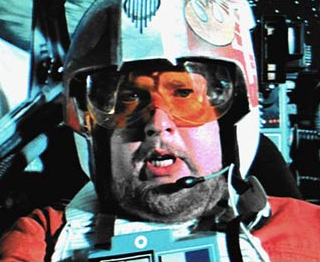
A rule of thumb in writing is to have one main thing the viewers have to accept; fairy-tale creatures are real, a pharmaceutical company has started the zombie apocalypse, we can relive your assassin ancestor's life with science, a plumber is transported to a strange world, or probably most notable example..


And after that is established the reader will accept anything that's within the possibilities of that first Blue Moon. As information is presented as long as it flows with a logical escalation, it feels believable. You're a wizard, so wizards and witches are real, so magic is real, so magical creatures are real, so there is another secretive side to our world, so it's maintained that muggles are hidden from this magical world, so magical gifted individuals must go to school to learn control of their gifts, so there is an entire ministry to keep order and maintain the wizarding world from muggles, the list could continue going but you get the idea. This is possibly the most basic rule when delivering exposition, and one of those ones that early writers seem to neglect more then anything. 

MORE SUSPENSION
Another commonly used tool in Blue Moon shape stories is to distance the narrator from the story in the beginning; 'my old man heard it from his dad's friend from in the war.' The narration explains they understand the story seems far-fetched so they're asking us as viewers to simply take it at its worth as a story, and so we do. We are willing to suspend disbelief that much farther because narrator has established that they are not responsible for the story, and so there is not much we as viewers can do but take the story for its worth. Look at the 1987 film The Princess Bride, without the grandfather/grandson storytelling aspect it's a really strange awkward little film. Think of the film without that side story, it's just kind of goofy and pretty well loses it's real strength as a story. An example of this technique used for exposition in games is the Witcher 2. Don't get me wrong, the storytelling has plenty of problems, but it does some things with this mechanic that we should look at to consider how this could be better adapted for storytelling in games. But, we'll talk about that another time.

(Geralt wants you to tune in again later)

 .So we've taken a look at how a properly delivered exposition and the suspension of disbelief can help the player get immersed in fictitious worlds, lets take a quick look at the most common ancient story shape and pacing.


JOURNEY 


 Last but certainly not least is the Journey, expected to be the oldest shape of storytelling the journey story has become one of the closest and most dear to us. That's because it is about overcoming adversity and growing as an individual, rites of passage into adulthood and achievement of self-affirmation, things that we can all understand and empathize with. In some degree nearly every story is about a journey of sorts, in the exception of a few really confusing art-house films. 
In a good Journey it instantly makes the reader see from the perspective of the protagonist and engages them in the conflict. As the oldest type of story the journey shape naturally has already worked out the best flow for its story to be structured on.  


(The picture above is the Three Act Structure of  the 2010 film The King's Speech.)


THE THREE ACT STRUCTURE
The three act structure is the most used story structure in narrative mediums; the difference in games being that, as a interactive medium, designers work a way to either skip the first act and fill it in later or get through it as quickly as possible. That style is known as In medias Res, (look at the Bear at the Door story shape in part 1) and essentially explains why things like Amnesia and flashbacks are used so often with the main character in games. This makes it easier to convey the first act, the background and life before the dramatic question without having to slow the pacing of the game for exposition. (The Extra Credits fokes did an amazing job explaining what I just went over with the story structure and such, but in much better detail with examples, if you don't get it yet watch their vid.)

Okay now the Three Act Structure is typically characterized by three distinct stages separated by two main plot points that signify the turning points in the protagonists story.  Think of this structure applied to your favorite dramatic film and decide where you think the two main plot points are to divide the three main acts.  When well done the plot points punctuate the shift in the stories tension and can really drive the protagonists story, by the end of the film you really empathize with the character's plight.

FINIAL CONCLUSION
Bad stories are the production of bad writing, plain and simple. Bad storytelling can be a little more difficult to pin down. I feel with all the complaints about bad storytelling the main root of the issue is when the story cannot decide where the different acts start and end or how to deliver the transition plot points. The times where you have gotten to some supposedly big important part of a game and just not cared. Look at Mafia2, the gameplay is mostly competent, but it falls flat at ever dramatic scene. (we'll give that title a breakdown later, it deserves it)

The industry is starting to figure it out but in respect to the bulk of triple-A titles, with little exception, the tricks to delivering a well structured narration within a interactive medium are still a hit and miss deal. To some it's only getting worse because of the producers-only-greenlighting-projects-that-look-like-something-that's-already-out-leading-to-stagnation-and-the-limitation-of-creativity-in-the-medium problem. But in my opinion it's simply a part of our growth, you have to fail to learn.


If you're paying attention you can already see the producers and tripple-A tycoons starting to figure out that well crafted stories can make good experiences, and people pay  for those. That and just maybe writers have found more crafty ways to sneak in good stories :)

      
We'll talk more later. Until next time, thanks for tuning in everyone and have a great night.

Next time we'll talk about exposition and why sometimes so many of us just don't care.